Ruth Zofia Skrytek
Get in touch with me: rzskrytek@gmail.com
+447450937793
Creative Portfolio
Get in touch with me: rzskrytek@gmail.com
+447450937793

TORR VALE MILL
MUSICIANS
RETREAT
Torr Vale Mill is a cotton mill complex built on a section of
land formed by a bend of the River Goyt, in New Mills, Derbyshire.
Torr Vale Mill is situated on the southern side of the Goyt River, which
was part of Cheshire until 1936. At this point the River Goyt flows through a
steep gorge called the Torrs. Differing from the more commonly occurring gritstone, the cliffs along the river are formed by a deep layer of sandstone. The mill buildings are predominately built out of this sandstone quarried right at the site. The earliest remaining building dates from the late 18th century, but the vast majority of the site in terms of footprint, volume of space and surviving fabric was built during a five year period mid 19th century, with a few smaller scale buildings filling the remaining open space built through the turn of the century.


Growing up in Derbyshire gave me an idea of the materials I saw on a daily basis. The edging cliffs of the Peak District helped me picture the materials. Deep grey stone and tall spruce trees surrounding the site gave me the idea to take the pale wood and concrete of modern materials. Also being a musician, my projects often include psychological design decisions. Musicians have used holiday retreats to write music often over the past century. The retreat offered at Torr Vale Mill would provide artists with the essentials; a place to sleep, relax, record, write and eat. The retreat also offers up as a venue, with a small stage and w/c on the basement floor.
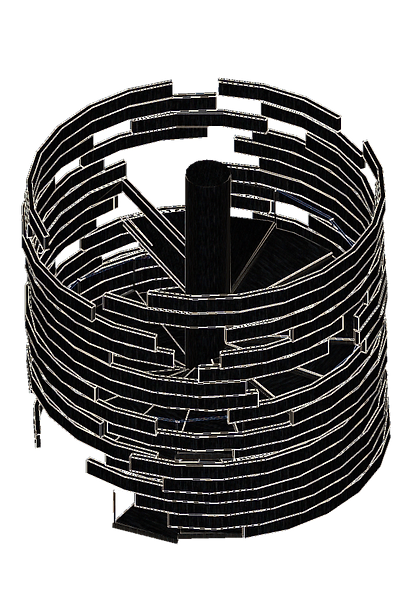
The staircase sits in the heart of the building, a large load-bearing collumn running through its centre. The head height is 243cm (8ft) and has LED light strips illuminating the staircase from within. The light bleeds out of it as if it were a stair to heaven. The thin steps give the staircase an enclosed space, where the lighting turns it from functional to decorative. The rings surrounding the stairs, bent spruce wood, seperates them from the rest of the building. The small gaps are windows to the outside. This idea came from studying the lives of those who worked in the mills in their prime.
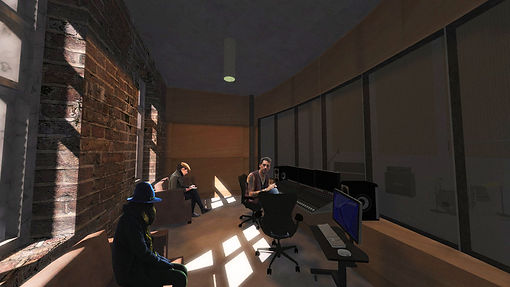
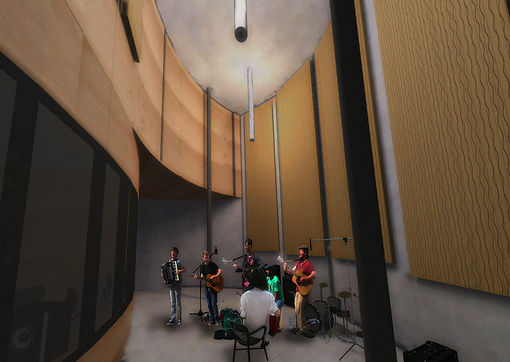
By introducing curved walls and areas of gloom and darkness the space is made atmospheric, the perfect environment for creative minds. The linear aspect of the original building is compromised with contrasting forms like circular rooms and means of access. Both studios (1 and 2) feature large, open spaces to accommodate room for instruments, equipment, etc. A store room provides security. The second studio on the ground floor is smaller but just as functional and many musicians require different types of sound whilst recording which is why a variety exists (eg. Abbey Road, London).The large height of Studio 1 provides an amphitheater-like sound whereas Studio 2 presents a bedroom recording feel.